Guides
Sume guides: the API, Formats, agents, models, media tools and pricing, each answer dated and sourced.

Generate 100 images with the Sume Image API: async jobs and polling
Submit each image with mode async, collect job ids, then poll status. Each job bills only if it completes; failed jobs use no credits.

Generate Grok Imagine clips from an agent with the generate_video tool
Hosted MCP exposes generate_video, which replaced video-router_create. How an agent should call it for grok-imagine-video-1.5 and what to read first.

MCP generate_image: model defaults to sume/auto, spend preview
The generate_image MCP tool takes the same payload as POST /v1/images, defaults payload.model to sume/auto, and runs a spend preview before it submits.

Can the Sume Image API output SVG? Not today; formats you get
No: output_format svg is in the schema for parity, but no catalog model advertises it, so the request is rejected. Sume returns png, jpeg or webp.

Image edit reference limits on Sume: 16 on GPT Image 2.5, 10 elsewhere
ChatGPT Image 2.5 takes up to 16 input_references; most edit rows take 10, Ideogram 4.5 takes 5. Imagen, Recraft and Qwen Image Max take none.

GPT Image 2.5 custom size: 1920x1080 fails, use 1920x1088
Edges must be multiples of 16, so 1080 is out. 1920x1088, 1280x720 and 3840x2160 pass the Sume rules; 1080x1350 does not, 1088x1360 does.

GPT Image 2.5 quality xhigh and max: which rows accept them on Sume
Only ChatGPT Image 2.5 (both variants) accepts xhigh and max; omit quality and it runs at high. Other rows reject them. Credits scale with quality.

Grok Imagine cost calculator in Python: ceil to the cent per job
A Python function that prices Grok Imagine clips on Sume at $0.0125 a second, ceiled to the cent per job, so 50 clips of 5 s is $3.50, not $3.13.

Grok Imagine Video 1.5 in TypeScript: first frame, poll, download
A Node 18+ script that animates one still with grok-imagine-video-1.5 on POST /v1/videos, polls the job, and saves the MP4. Fields Sume refuses are listed.

H3 Max lip sync and audio over 14.8 seconds: split or Fabric
Audio over 14.8 seconds is refused on Sume's H3 Max lip sync because the provider silently clips the rest. Fabric 1.0 takes the long line.

H3 Max lip sync rejects audio under 5 seconds: what to do
Sume's MiniMax H3 Max lip sync takes 5 to 14.8 seconds of audio and returns invalid_request outside that window. Fabric is the fallback for shorter lines.

H3 Max lip sync resolutions on Sume: 480p, 768p, 1080p, no 2K
Sume's H3 Max lip sync offers 480p, 768p (default) and 1080p, no 2K. At the documented list times 1.25 that is $0.0625, $0.10 or $0.20 per second.

H3 Max vs Seedance 2.5 for 1080p clips with sound
Both give 1080p with sound on Sume. H3 Max runs 5-15 s at a 1080p list of $0.16/s ($0.20/s billed); Seedance 2.5 runs 4-30 s. Read 2026-10-13.

Hailuo H3 Regen on Sume: regenerate one H3 clip at 2K
hailuo-h3-regen re-prompts a clip you made with MiniMax H3 and returns 2K. The source must be 768p H3 output, 4.5-15 s with audio. Read 2026-10-13.

Halloween photo clips: 12 photos at 8 seconds on Grok Imagine
Animate 12 Halloween photos into 8-second clips on Sume's Grok Imagine row for $1.20 in total. Use a first frame per clip and one idempotency key per photo.

HelixBench: what spatial-acoustic consistency tests in AI video
HelixBench scores whether synthesized sound fields track camera movement. What the arXiv page says it measures, and a manual way to spot-check any AI clip.

HelixWorld 768x512 at 24 fps vs a 720p API video: what differs
HelixWorld outputs 768x512 at 24 fps with stereo sound on one GPU. A Sume Omni clip is 16:9 or 9:16 at 360p to 4K. Compare size, ratio, length and delivery.

How much does a 30-second AI video cost? Sume prices by tier
A 30-second AI video on Sume costs from $1.88 (Wan 3.0 480p) to $42.65 (Seedance 2.5 1080p) in one job. Table by resolution, list x 1.25.
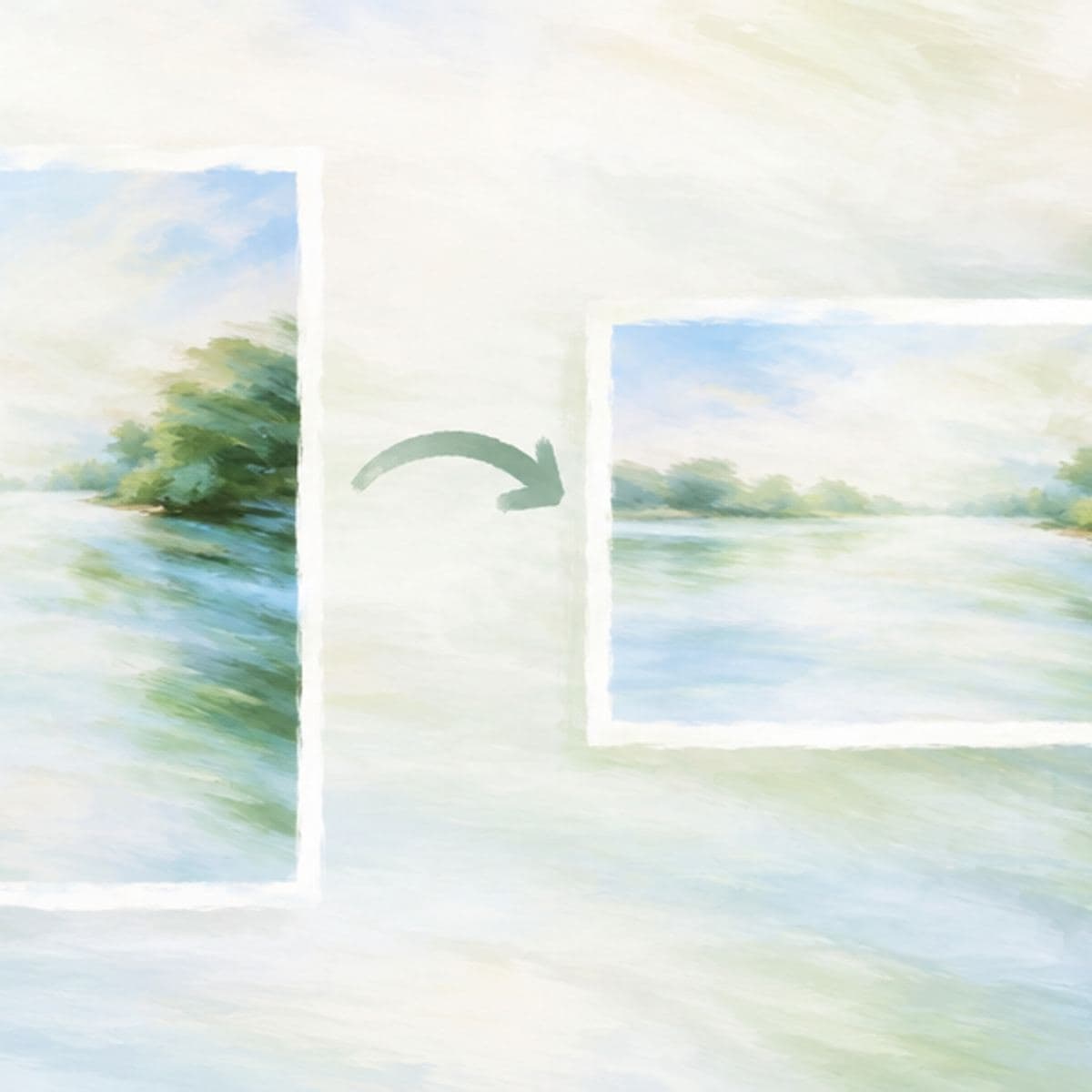
AI image edit changed my crop: aspect_ratio auto vs omitted on Sume
On edit calls, aspect_ratio auto matches the reference; leaving the field out is not the same thing. Ideogram 4.5 keeps the source shape when you omit it.

Stream partial images from the Sume Image API? 400, use async events
stream: true returns 400 streaming_not_supported and every catalog row reports supports_streaming false. For progress, submit async and read job events.

Image-to-video API with sound: five-second cost by Sume row
Omni Flash 1.1 (always on), Wan 3.0 (audio), MiniMax H3 and H3 Max (native stereo) take a first frame and render sound. A 5 s clip is $0.19 to $0.94 on Sume.

Kling 3 vs Gemini Omni Flash for a 1080p clip: limits compared
Both reach 1080p on Sume. Kling 3 runs 4-15 s and is 1080p only; Omni runs 3-10 s, tops out at 4K, and takes references and edits. Read 2026-10-13.

Kling 4 or Vidu Q4 on Sume: model_not_found and what to call
Sume has no kling-4 or vidu-q4 row, so a submit with those ids fails with 404 model_not_found. Call kling-3, wan-3.0 or sume/auto. Read 2026-10-13.

Launch-day checklist before moving off kling-3 on Sume
Before you swap kling-3 for a newer Kling or another family, check the catalog, 1080p-only output, 4-15 s, no references, and ratio support. Read 2026-10-13.

Long AI video clips on Sume: which rows pass 15 seconds
Only two Sume rows pass 15 seconds in one job: Seedance 2.5 (4-30 s) and Wan 3.0 (2-30 s). All other rows stop at 15 s or less. Read 2026-10-13.

MAI-Voice-2.1 emotion control vs Sonic's six emotions on Sume
Microsoft lists granular emotion control for MAI-Voice-2.1. On Sume, Sonic 3 rows take six named emotions in generation_config.emotion; Eleven rows have none.

MAI-Voice-2.1 on OpenRouter: audio/speech call, mp3 or pcm
OpenRouter serves microsoft/mai-voice-2.1 at POST /api/v1/audio/speech and returns raw audio bytes, mp3 or pcm. Here is the call and how Sume jobs differ.

Decision-1 returns 429: back off, then fail closed before Sume
Microsoft says retry a Decision-1 429 with exponential backoff. Cap the retries, then route the brief to review so a throttled gate never renders.

Decision-1, then Haiku 5.5, then a person: a three-tier gate
Add an abstention option to a Decision-1 choice, escalate unsure briefs to Claude Haiku 5.5, and keep people for the rest, before any paid Sume call.

Decision-1 picks a video model; check it against Sume's catalog
Let a choice question pick among three model ids, then validate the pick against GET /v1/videos/models and fall back to sume/auto when it is missing.

Decision-1 as a gate for avatar requests: where a person must decide
Microsoft says not to use Decision-1 scores as the sole basis for decisions about individuals. Keep a person on avatar and likeness requests before Sume runs.

Microsoft-Decision-1: gate a text brief before a paid Sume video job
Send the brief to Decision-1 as a choice question, render only on 'render', and fail closed on any error. Python sample using the Foundry systemone path.

Decision-1 score question: order a Sume render queue by urgency
A Decision-1 score is a probability-weighted index, good for ordering but not an absolute grade. Sort briefs with it, then respect Sume's queue limits.

Decision-1: judge a pending generate_video call as JSON state
Decision-1 accepts JSON as state. Pass the tool arguments of a pending Sume call and ask one noul question; keep keys and signed URLs out of the state.

Decision-1: ask three questions in one request before a Sume render
Questions sharing a state can share one Decision-1 request. Route, rate severity and check repeat contact once, then render only if all three pass.

Microsoft-Decision-1 vs Clef: which gate sits in front of Sume?
Decision-1 reads text or JSON; Clef also takes images and has a 65,536-token window. Neither replaces Sume's dry_run, spend cap, or 402.

Image API returned 202 at 4K: handle the job envelope in Python
A slow 4K, high-quality or large-n request can miss the 30 second wait and return 202 with a job, not images. Branch on the status code, then poll.

Nano Banana 2.1 text in images: posters and infographics on Sume
fal says Nano Banana 2.1 improves text rendering for posters and infographics. Sume runs it at $0.10 per 1K image; test your exact words before a print run.

Nano Banana 2.1 thinking levels and search grounding: not on Sume
fal documents thinking levels, web-search grounding and a system prompt for Nano Banana 2.1. Sume's /v1/images row lists none and returns 400 for them.

Nova 2.5 Sonic turn-taking: does a voiceover need it?
No. Controllable turn-taking and mixed voice and text sessions in Nova 2.5 Sonic serve live agents. A rendered voiceover is one script in, one file out.

Omni edit duration is only a reserve hint: 8 seconds by default
On a video_url edit, Sume does not send duration to the provider. It only sizes the credit reserve (default 8 s, $1.00 at 720p). The source sets the length.

Omni Flash edit: test at 360p, then run the final at 1080p
Prove an Omni Flash edit prompt at 360p ($0.0375 a second on Sume) before paying for 1080p ($0.1875 a second). Use a new Idempotency-Key for each resolution.

Omni Flash edit in sync mode: it waits 30 seconds, then you poll
Sync mode on Sume waits at most 30 seconds. An Omni edit may not finish in that time, so read the job id from the reply and poll it. Never resubmit.

Omni Flash image-to-video: frame_images or input_references?
frame_images with first_frame pins your photo as the opening frame. A single input_references image conditions the whole clip instead. Pick by what you want.

One prompt across video models: what to rewrite on Sume
A prompt that works on one Sume video row may need edits on another: Omni uses IMAGE_REF tokens, Kling takes no references, Veo is text-only. Read 2026-10-13.

Pick an AI video model by the input you have: photo, clip, audio, none
Match the Sume video row to your input: nothing gets Wan 3.0 or Omni, a photo gets a first-frame row, a clip gets Omni edit or Recast. Read 2026-10-13.

Python preflight: price a video batch before you submit to Sume
A short Python function prices Seedance 2.5 and Wan 3.0 jobs at list x 1.25 and compares the total with your balance before any submit. Example: $99.36.

Python script: filter Sume video models by length, size and ratio
A short Python script reads GET /v1/videos/models and keeps the rows that fit your seconds, resolution and aspect ratio. Run it before you pick an id.