Comparisons
Sume compared with other video and generative-media platforms. Each post uses the vendor's own pages, read on the date the post states.

Griffin-Lite or a rendered avatar clip for Q4? A decision table
Tavus Griffin-Lite is a research preview for invited testers. Sume Avatar 1.0 renders scripted clips from $11.04 per minute. Pick by the job, not the demo.

How many references can a holiday ad take? Five video models compared
Seedance 2.5 lists 30 images, Wan 3.0 up to 20 assets, Omni Flash 1.1 on Sume 10 images and 3 short clips, Luma Ray3.2 16 keyframes. What it means for ad kits.

Ad text in AI video: trust Wan 3.0 text, or fix the image first?
Alibaba says Wan 3.0 renders text in 12 languages. For a price or legal line, edit the text in a still with Ideogram 4.5, then animate it: $0.70 per language.

GPT Image 2.5 mask edit, then an Ideogram 4.5 text pass: one chain
Use GPT Image 2.5 for the masked region change and Ideogram 4.5 for the text pass, both on POST /v1/images. When it beats one model, and what each step bills.

Translate packaging text: Ideogram 4.5 vs Nano Banana Pro per language
Translate label text in one image per language. On Sume Ideogram 4.5 costs $0.0375 to $0.275 per edit; Nano Banana Pro $0.1875 at 1K to 2K. Limits compared.

Wan 3.0 instruction-based editing vs Sume's Omni edit: what each takes
Alibaba lists instruction editing for Wan 3.0, but Sume documents edit only on Gemini Omni Flash 1.1. Inputs, limits and price per second side by side.

Luma Ray3.2 20 s 1080p vs MiniMax H3 Max 15 s 1080p on Sume
Luma lists Ray3.2 at 1080p for up to 20 s with 16 keyframes. Sume does not run Ray3.2; H3 Max 1080p is 5-15 s at $0.20 a second. What to use for 20 seconds.

Ray 3.2 takes 16 keyframes; Sume frame_images takes two
Luma lists up to 16 keyframes per Ray 3.2 clip. Sume's frame_images array uses first_frame and last_frame. Which catalog models list them, per the docs.

When to pick Wan 3.0: five questions vs Seedance 2.5 and Omni 1.1
Pick Wan 3.0 on Sume for single clips of 11 to 30 seconds, a 2 second minimum or flat per-second prices. Pick Omni to edit footage or render 4K.
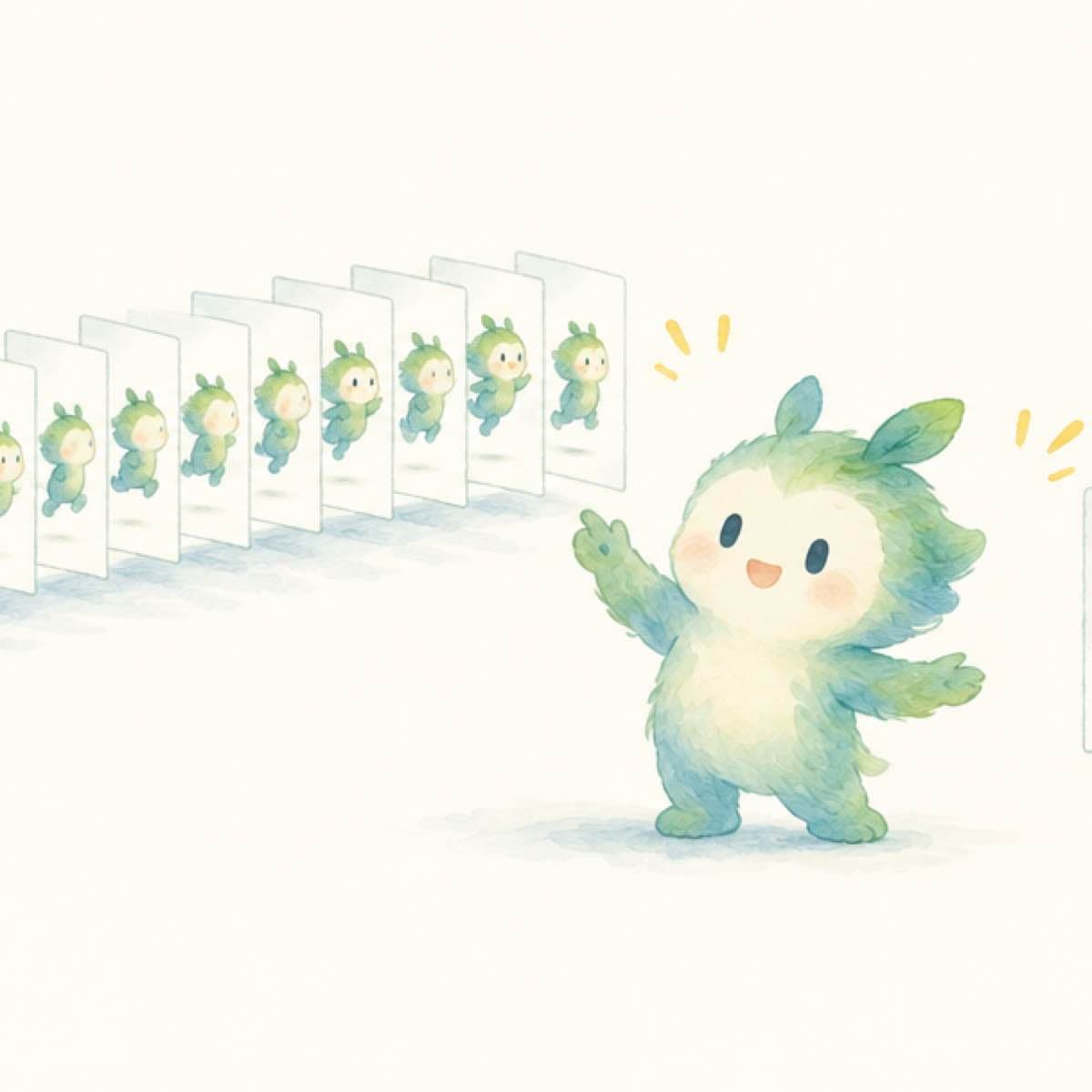
Ray3.2's 16 keyframes vs Omni's two frames: what Sume can do
Luma lists up to 16 keyframes for Ray3.2; Omni takes two. On Sume you chain Omni pairs: 5 keyframes is 4 clips of 5 s, $3.76 at 1080p.

Omni Flash 1.1 extends to 40 s: what Sume offers instead
Google says Omni Flash 1.1 extends in 10 s steps to 40 s. Sume lists Omni at 3-10 s, no extend. Four clips cost $5.00 at 720p; H3 Max needs three.

Omni 1.1 Flash 1080p vs Wan 3.0 1080p: price for 30 seconds
A 30 second 1080p film costs $7.50 on Sume's Wan 3.0 in one request, or $5.625 as three 10 s Gemini Omni 1.1 Flash clips. What the cheaper route costs you.

Put a person in a new scene: H3 Max reference video or Recast?
Recast swaps people in a video you have. Reference-to-video makes a new clip from photos. Inputs and 10-second prices: $1.00 vs $3.75 at 768p.

Ideogram 4.5 vs Seedream 4.5 for image edits: limits and price on Sume
Both edit via POST /v1/images. Ideogram 4.5 takes 5 references, priced by quality; Seedream 4.5 takes 10 at one rate. Catalog facts, read 2026-10-05.

Ray 3.2 tracks 8 faces; Sume swaps 1-4 people with H3 Max Recast
Luma Ray 3.2 lists facial tracking for up to 8 faces. Sume has no tracking output, but h3-max-recast swaps 1-4 people in a clip and Kling drives a still.

Omni scene extension to 40 s: Gemini app plans versus Sume per-second
Google offers Omni scene extension to 40 s in Flow and the Gemini app for Plus, Pro and Ultra. On Sume you pay per second instead; here is what carries over.

Seedance 2.5 or 2.0? Four questions that pick the model on Sume
Pick between seedance-2.5 and seedance-2 with four questions: length over 15 s, the price gap, 1080p need and draft versus keeper. Sume prices inside.

Wan 3.0's 20 reference assets vs Omni's 10 images and 3 clips
Alibaba lists up to 20 reference assets for Wan 3.0; Sume's Omni row takes 10 images and 3 clips of 3 s. Which to pick for a branded clip, with costs per 10 s.

Luma Ray 3.2 features and the Sume endpoint for each one
Sume does not run Ray 3.2. Match its keyframes, reframe, face tracking and 20 s clips to the Sume surfaces that exist, with docs-verified limits.

Clean vs verbatim transcripts: MAI-Transcribe-2 style vs Sume captions
MAI-Transcribe-2 batch has transcribeStyle clean or verbatim. Sume STT has no style flag; for polished captions supply script_text and keep your wording.

DeepSeek Flash or V4 Pro for a Sume job-polling loop: a price split
On DeepSeek's page Flash costs under a third of V4 Pro per token. Use it for jobs_wait polling; keep payload writing on one model. Read 2026-10-05.

MAI streaming regions vs Sume: no region field in the STT request
MAI-Transcribe-2-Streaming lists swedencentral, centralus, southindia (eastus2 soon). Sume's STT request has no region field, so ask support about residency.

MAI-Voice styles via express-as vs Sume's emotion field
MAI voices set styles with SSML mstts:express-as; some only have neutral. Sume has no SSML; generation_config.emotion is a free string up to 64 characters.

Nano Banana 2 vs Ideogram 4.5 for photo edits: ratios, 4K, refs
Nano Banana 2 offers 512 to 4K, 21:9 and 10 references on Sume. Ideogram 4.5 offers 1K and 2K, 15 ratios, 5 references and keeps the source shape on edits.

Public preview with no SLA: MAI voices vs Sume's sonic-preview beta
MAI voices are public preview with no SLA. Sume's sonic-preview is a beta channel that can change; sonic-latest never points to it. Keep both off production.

Retouch 200 product photos: Image API, Agent Completion or Format?
For 200 identical retouches use POST /v1/images: fixed model, price per image, plan queue limits. Use an Agent Completion only if each photo needs judgement.

Text change, region change or background swap: which Sume image route
Pick the Sume image edit route by the kind of change: Ideogram 4.5 for words, ChatGPT Image 2.5 with mask_url for a region, a reference edit for backgrounds.

Luma Ray3.2 features against what Sume's docs list: a one-page matrix
Luma lists 16 keyframes, 20 s, 1080p, HDR with 16-bit EXR, 8-face tracking and Reframe for Ray3.2. Sume does not ship it; here is what Sume's docs cover.

Draft first: Omni 1.1 Flash 360p or Seedance 2.5 at 480p on Sume
Google says Omni 1.1 Flash's 360p draft mode is up to 60% faster at a third of the cost. What that proves, and where Seedance 2.5 480p fits on Sume.

Wan 3.0 takes documents as references. What Sume's route accepts
Alibaba lists documents, webpages and text among Wan 3.0's 20 reference assets. Sume's video route takes image, video and audio references. How to bridge it.

Omni 1.1 Flash extends to 40 s; Seedance 2.5 makes 30 s in one pass
Google extends Omni 1.1 Flash clips in 10 s steps to 40 s. Seedance 2.5 generates 30 s in one pass. How to get 40 s on Sume with Seedance and Timeline.

One voice, many languages: Sume TTS 409 and confirm_language_mismatch
Microsoft's MAI-Voice-2.1 is reported to keep one voice across 23 languages. On Sume, a voice with a different language returns 409 until you confirm.

Seedance 2.5, Wan 3.0, Omni Flash 1.1 and H3: four vendors, one wallet
Each new video model reaches developers through a different vendor channel. Sume lists all four under one key, one USD balance and one job API.

Ray3.2 takes 16 keyframes per clip. Sume takes two frames: chain them
Luma lists up to 16 keyframes per Ray3.2 clip. Sume does not ship Ray3.2, but its first and last frame jobs chain into a keyframed shot.

Where to use Wan 3.0: wan.video, QwenCloud, or the wan-3.0 API on Sume
Which door to Wan 3.0 fits: Alibaba's channels named in its README, or the wan-3.0 id on Sume with an API key, MCP and Timeline for multi-shot work.

Wan 3.0 vs Seedance 2.5: 24 days apart, both 30 s. What differs
Seedance 2.5 launched July 31, Wan 3.0 about August 24 2026. Both claim 30 seconds. Vendor reference limits compared, and the two Sume ids.

Omni extension reads 10 s of context; a Sume chain passes a frame
What Google's scene extension carries into the next 10 seconds, and what Sume carriers hand over instead: a last frame, 3-second clips or image refs.

Draft vs final render cost: a 6-second clip on five Sume video models
The final render costs 2.5x to 10x the draft on Sume, depending on the model. A 6-second clip priced at the cheapest and the top tier, per model.

MiniMax H3 vs H3 Max on Sume: 768p costs 33 percent more on Max
At 768p a second of minimax-h3-max costs $0.10 on Sume against $0.075 for minimax-h3. What the extra third buys, with a 10-second price table.

Seedance 2.5 takes 10 video references; Omni 1.1 limits them to 3 s
Seed lists up to 10 video clips per Seedance 2.5 pass. Google's Omni 1.1 Flash video references are up to 3 s. What that means for source clips on Sume.

Reference limits per request, vendor vs Sume: Wan 3.0, Seedance, Omni
What each vendor says one video request can take, next to what Sume's catalog allows: Wan 3.0, Seedance 2.5, Gemini Omni 1.1 Flash, and Ray3.2.

Kling motion control vs Genjutsu Motion Transfer: what each costs
Both repeat a reference video's movement. Kling motion control: one photo, $0.1575 a second. Genjutsu: 1 to 8 images, $0.3975 (480p) or $0.85125 (720p).

Put a specific person in AI video after the Sora API shutdown
The Sora Videos API shut down on September 24, 2026. To keep a specific person on screen, Sume has three routes: motion control, Recast and reference images.
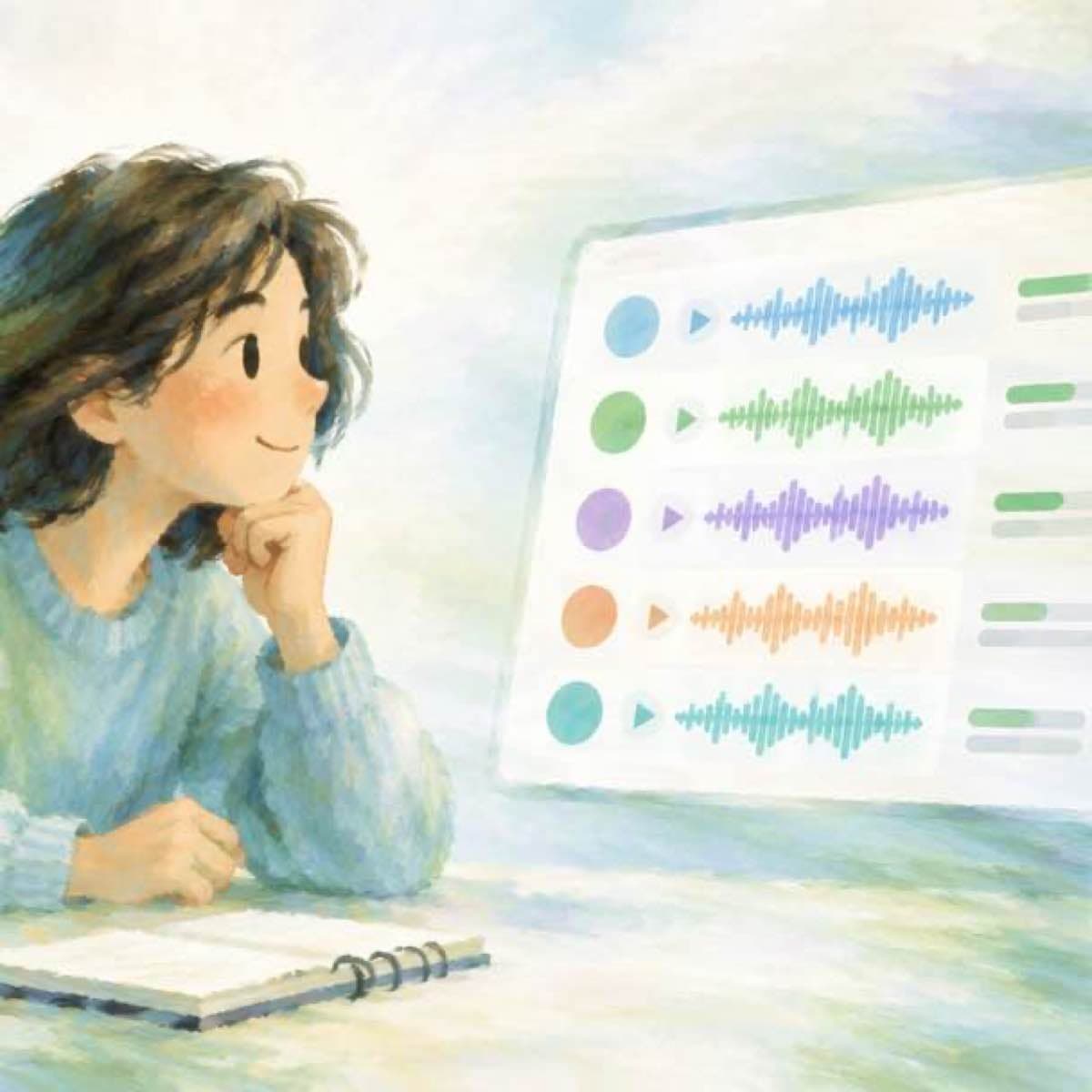
Reading a vendor-run TTS leaderboard: Gemini 3.8 Flash TTS on VoiceEQ
Hume's blog lists Gemini 3.8 Flash TTS atop its Real-World VoiceEQ board. What that does and does not tell you, plus a blind test to run on your script.

Seedance 2.5: fal's 30 s at 720p listing vs Sume's catalog limits
fal.ai/models says Seedance 2.5 is a native 30-second clip at up to 720p. Sume's catalog lists 4 to 30 s at 480p, 720p and 1080p. Read the live values.

Image reference limits: 10 on ElevenLabs, 16 on Sume, 5 Ideogram 4.5
ElevenLabs lists 10 references for GPT Image 2.5. Sume's docs list 16 for the same models and 5 total for Ideogram 4.5. A table, a count guard and an edit rule.

Midjourney has no public API: comparable control in a pipeline
Midjourney's 10/1 alpha adds a pinnable --exp setting and edits that keep aspect ratio. What to use when you need that kind of control from code.

Suno v6 and label partners: what it means for an ad soundtrack
Suno's v6 post names WMG, BMG and Believe and upload screening. What a rights-minded team should check before using any AI music in a paid ad.