Sume Avatar 1.0
Sume Avatar 1.0 by API: reusable avatars, talking video from a script, multi-scene and two-speaker videos, previews, B-roll, and Face Swap (Beta).
Start with Introducing Sume Avatar 1.0

UGC hook, demo, CTA: one avatar video with a silence beat
Build a 9:16 UGC-style ad as three scenes in one avatar talking-video request: spoken hook, silent demo beat, spoken CTA, inside the 4-60 second window.

Denmark's likeness bill: 50 years after death, avatar checks
Denmark's likeness bill proposes protection for 50 years after death, and the European Commission has raised concerns. What to check before avatar videos.

Avatar validation failed: fix it, or skip verification
Searches for HeyGen avatar validation failed show people stuck on verification. On Sume an avatar create is a job you poll, and failures return a job error.

Avatar V multi-look vs Sume scene prompts
HeyGen Avatar V adds multi-look generation. On Sume an avatar keeps one identity, and each video's look comes from scene prompts, product images and quality.

Split a 3-minute script into 60-second avatar jobs
Sume avatar talking videos accept scripts of an estimated 4-60 seconds. Split a 3-minute script into jobs of that size, then join the audio with timeline audio.

Italy deepfake offense: 1-5 years, and avatar consent records
A secondary source says Italy's Law 132/2025 took effect Oct 10, 2025 and Art. 612-quater carries 1-5 years for deepfakes. Keep consent records for avatars.

Udemy promo video at 90 s: an avatar intro in two clips
Udemy's guidance puts an ideal promo video near 90 seconds. A Sume avatar clip tops out at 60 seconds, so build the intro as two clips and join them.

Face swap quality tiers: pick for a 12-second clip
Avatar Face Swap Beta needs quality standard, plus or max and a source clip of about 4 to 15 seconds with audio. A 12-second clip fits; test the tiers.

FTC reviews rule: virtual influencers allowed, fake reviews not
The FTC's reviews rule Q&A says section 465.2 bans fake reviews but does not prohibit virtual influencers. Sume Avatar 1.0 makes spokesperson clips.

Alt text for an avatar video poster: WCAG 1.1.1 in practice
A poster image from a Sume avatar preview still needs a text alternative under WCAG 1.1.1, and the video needs descriptive identification. What to write.

Silent avatar video clip: what WCAG 1.2.1 asks for
A silent beat or silent clip in an avatar video is prerecorded video-only content. Here is what WCAG 1.2.1 wants and how to supply it from Sume.

WCAG 1.2.3 for an AI avatar video: is the script enough?
A talking-head avatar video already has its words in a script. Here is when that text meets WCAG 1.2.3 and what to add if the picture carries more.

Polling an avatar video job: HeyGen 30s then 60s vs Sume hints
HeyGen's skill polls every 30 seconds, then every 60. Sume's job status returns next_poll_after_seconds. A runnable Python poller that follows it.

Avatar preview captions: stored at create, burned at generate-video
Preview stills are never captioned. Caption settings on the preview are stored, then applied at generate-video. What that means.

Crowdfunding intro video: preview first, render at Max
Check a 30-second campaign intro on a Sume preview, then override quality to max only at generate-video. A 30-second Max render costs $16.50.

Avatar video script too long? The 4 to 60 second rule
Sume Avatar 1.0 accepts scripts it estimates at 4 to 60 seconds. Estimate yours first, then shorten it or split it into separate videos before you submit.

Airbnb host welcome video with an AI avatar in your own living room
Make a 30-second welcome video for guests with an AI avatar placed in a photo of your listing. Costs at standard, plus and max, plus the request to send.

Griffin-style listening beats in a recorded avatar video: what works
Tavus Griffin nods and says mm-hm while it listens. A recorded Sume avatar video cannot listen, but it can hold a silent beat. Here is a preview-first test.

Book launch avatar video: use the cover as the product image, cost
An author avatar introduces a book with the cover as the product image. A 30-second clip costs $5.82 at standard, $7.74 at plus and $17.40 at max.

Car dealership vehicle intro: avatar video with the car as product
Use a car photo as the product image in an AI avatar video. A 20-second intro costs $3.88 at standard, $5.16 at plus and $11.60 at max. See the request.

Fitness coach 12-week challenge: weekly avatar kickoff clips, cost
Twelve weekly 15-second kickoff videos from one AI avatar cost about $33 at standard and $44 at plus. See the per-week math and a scripting pattern.

Handmade seller: an About the Maker avatar video with a product photo
A 25-second About the Maker clip for a shop page costs $4.85 at standard and $6.45 at plus with a product photo. See the request and a script frame.

HeyGen LiveAvatar: 1 credit is 30 s in FULL mode, 1 min in LITE
HeyGen's LiveAvatar FAQ prices streaming by the credit: 30 s in FULL mode, 1 min in LITE. Compare that with a recorded Sume avatar video, billed per second.

InfiniteTalk's 40 s single clip vs a 60 s Sume avatar video
InfiniteTalk makes about 40 s in single-clip mode and unlimited length when streaming. Compare that with a Sume avatar video of 4 to 60 s, priced per second.

LatentSync 1.6 needs 18 GB VRAM: a hosted lip sync from a still
LatentSync 1.6 is a 512 px video-plus-audio lip-sync model that wants 18 GB of GPU memory. No GPU, only a photo? Here is the Sume still-plus-audio route.

LivePortrait needs a driving video, not audio: Kling motion control
LivePortrait animates a portrait from a driving video, not from speech. Sume's Kling 3.0 motion control route does that as a hosted API, per second.

Nonprofit donor thank-you: three tiered avatar videos, total cost
Three 20-second thank-you videos, one per giving tier, cost $11.04 in total at standard. See how to script them and why you review a preview first.
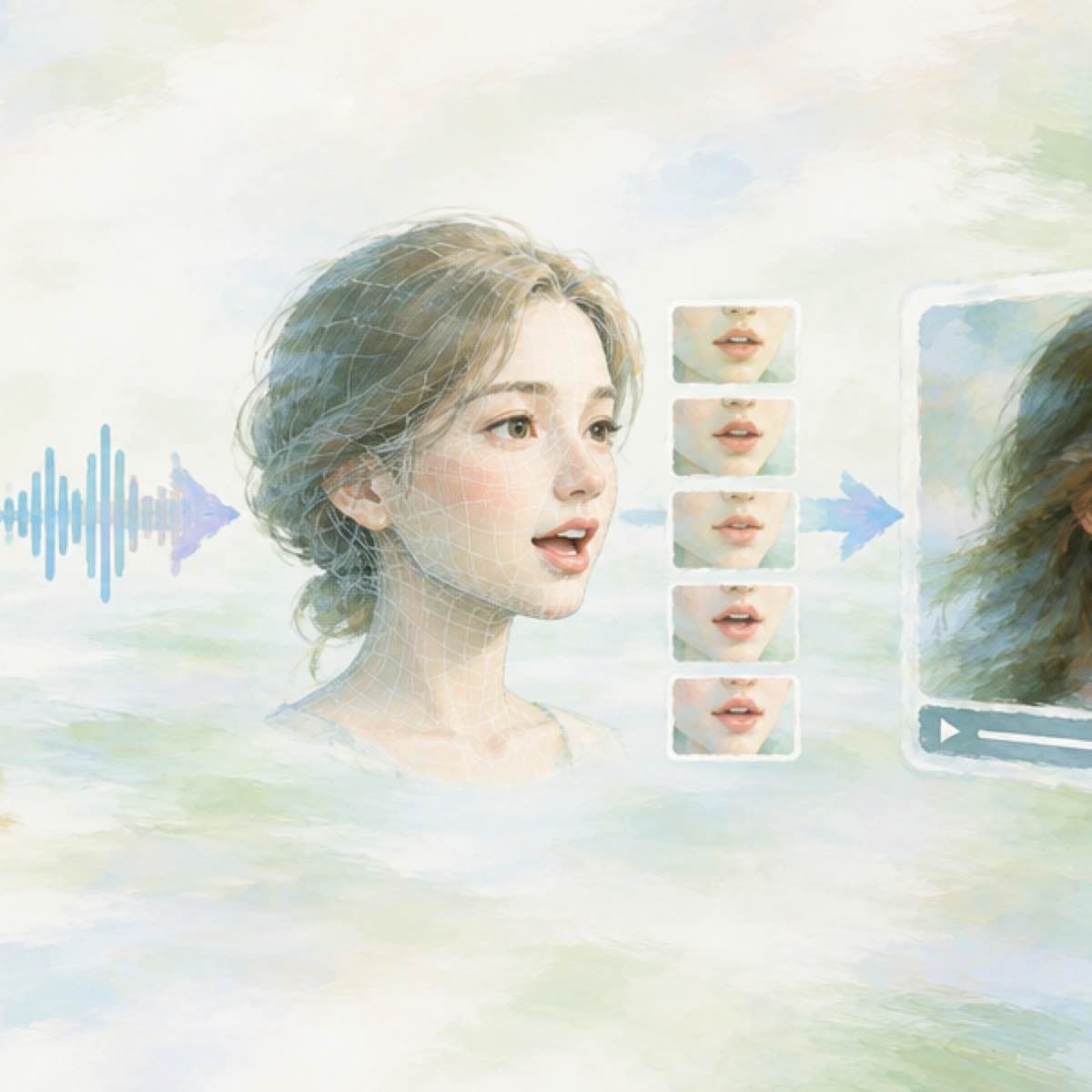
Audio2Face-3D blendshapes vs a finished lip-synced MP4 from a photo
NVIDIA Audio2Face-3D turns audio into facial animation data for a 3D rig. If you want a finished MP4 from a photo instead, this is the Sume route and its cost.

Podcast episode promo: a 20-second avatar host clip, cost by tier
Turn an episode summary into a 20-second vertical promo with an AI avatar host. Standard costs $3.68, plus $4.90, max $11.00. Includes captions and a script.

SadTalker is Apache 2.0: self-host it or call a hosted talking clip?
SadTalker turns one portrait and an audio file into a talking head. What it costs you to run, and the hosted Sume still-plus-audio route that skips the GPU.

School principal weekly update: a 40-second avatar clip, 36 weeks
A 40-second weekly announcement from one AI avatar costs $7.36 at standard, or $264.96 for a 36-week school year. Includes a script frame and caption tip.

Wav2Lip is research-only: what to use for commercial lip sync
Wav2Lip's README limits results to research, academic or personal use. For client or ad work, here is the still-plus-audio lip sync Sume offers, with costs.

Zoom Clips custom avatar: 18 minutes a month vs per-second billing
Zoom's Custom Avatar add-on lists 5 avatars and 18 minutes of AI video a month. See how that compares with paying Sume per second, with worked costs.

Zoom realistic avatars need your camera on: a recorded avatar clip
Zoom's realistic avatars use your live camera in meetings. If you want an avatar to deliver a weekly update while you are away, here is the recorded route.

How to check a face swap result: audio, length and stills
Check a Sume face swap before publishing: confirm the audio stream, compare length with the source, and sample stills with video inspect. Free probe.

How to make an AI UGC ad look less staged with Avatar 1.0
Less-staged AI UGC comes from the first frame: phone-style framing, a casual scene prompt, an approved preview, then the final render. The levers Sume exposes.

Does Sume face swap keep the original voice, outfit and scene?
Sume's Face Swap (Beta) keeps the source clip's audio, camera and timing but replaces the whole person, not just the face. What stays, what changes, cost.

AI spokesperson: build the avatar from a prompt, profile or photo?
Sume makes an avatar three ways: prompt, profile traits or a photo. Which one suits a brand spokesperson, what each costs, and the rights each one raises.

AI spokesperson video price per second: standard, plus, max
Sume Avatar 1.0 talking video bills per second: $0.184 standard, $0.245 plus, $0.55 max, with a product image adding a little. A 4-second floor example.

Avatar video aspect ratios: 9:16, 1:1, 4:3 or 16:9 for ads?
Sume avatar videos render in 1:1, 3:4, 9:16, 4:3 or 16:9 at 720p. Which ratio to pick for feed, story and listing placements, and what the default is.

Create an AI spokesperson avatar from a prompt or photo
Sume Avatar 1.0 creates a reusable avatar at a flat $0.95 from a text prompt, a photo, or props. How to make one before you generate talking videos.

Demand Gen: what to hold constant between two AI video ads
Google says Demand Gen experiment campaigns should differ in one variable. A field-by-field checklist for two Sume avatar videos so only the hook changes.

Face swap for UGC ads: source clip rules (Sume beta)
Sume's beta Avatar Face Swap applies a ready avatar face to a public 4-15 second source video with audio. Required fields, quality tiers and what it rejects.

Write an avatar script that sounds authentic in 4 to 60 seconds
HeyGen says 64.6% trust avatars that sound authentic. Draft a Sume avatar script in the 4-60 second window with scene beats and a silence gap.

Make an avatar video look professional: scene photo of your office
53.9% of shelved videos were held back for not looking professional enough, per HeyGen. Set a Sume avatar scene from your own photo, prompt or per-scene image.

Lip sync looks fake? Check teeth, profile, timing and seams on Sume
sync. labs names four tells of fake lip sync. Pull PNG stills from a Sume avatar clip with video frames at the moments each tell shows up, then decide.

Lip sync audio under 5 seconds: H3 Max rejects it, use Fabric
Sume's MiniMax H3 Max lip sync only accepts 5 to 14.8 seconds of audio and returns invalid_request outside it. A 4.5-second line goes to Fabric instead.

YouTube avatar vs Sume Avatar: selfie capture or prompt and photo
YouTube's avatar is made once from your own face and voice and used in its AI tools. How it is created, its limits, and how Sume's Avatar 1.0 differs.