Blog
Sume blog: agent-native video generation, Avatar 1.0 orchestration, and production APIs for builders and coding agents.
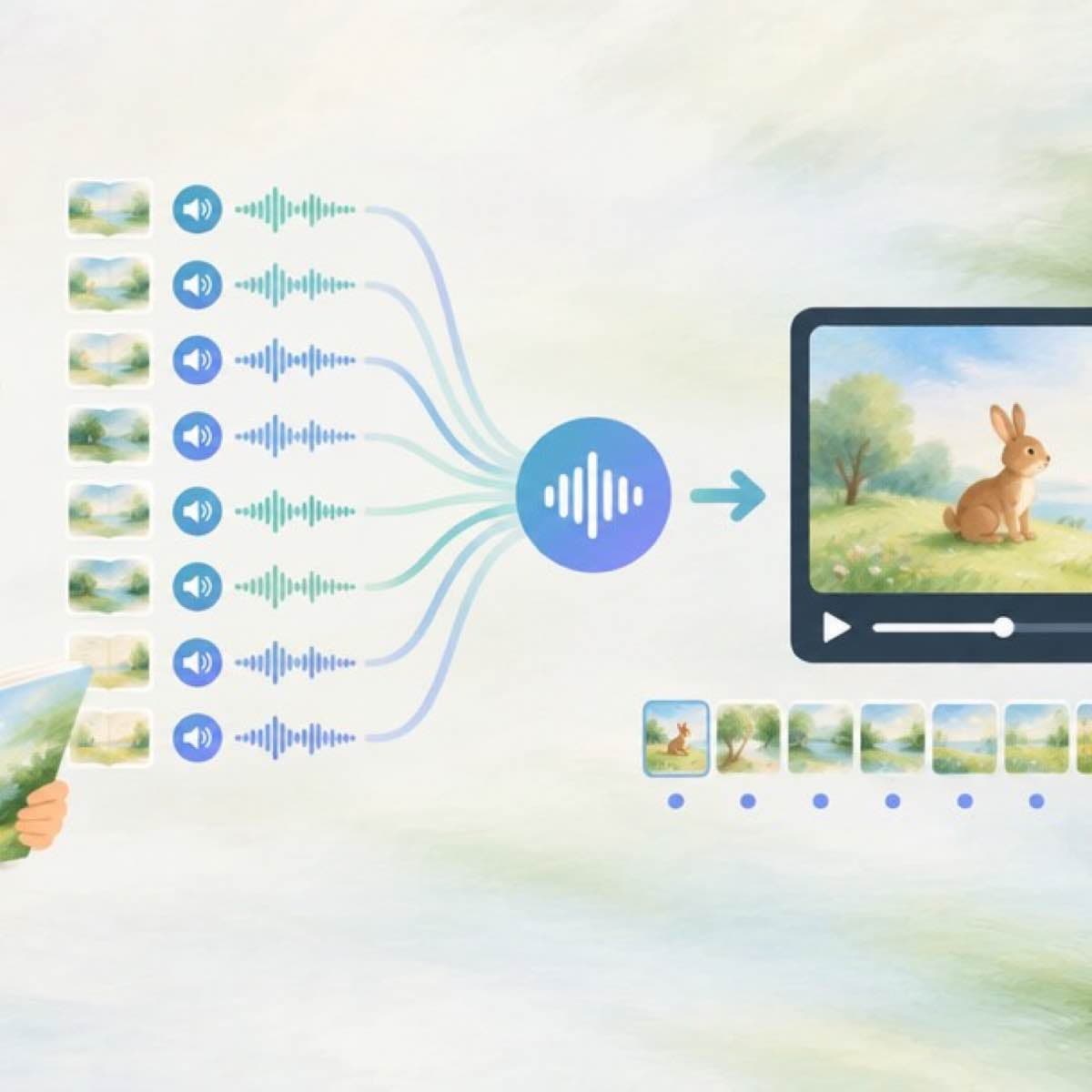
14-page read-aloud video: per-page TTS, one concat, page-turn offsets
Narrate 14 pages of 160 characters with Sume TTS ($0.11), join for $0.01, set page starts from segments[]. About $0.32 with a 2-minute render.

Which video specs TikTok, LinkedIn, Pinterest and Shorts leave blank
Only TikTok lists a bitrate; only LinkedIn lists a frame rate; Pinterest lists no resolution; the Shorts page lists no size at all. What Sume can set for each.

Lip sync still aspect ratio 0.4 to 2.5: which shapes pass
Sume's H3 Max Lip Sync takes a public HTTPS still with aspect ratio 0.4 to 2.5. 9:16 and 21:9 pass; 1:3 and 32:9 do not. Crop numbers inside.

Still on /v1/image-router/generate? It works but gets no new params
Sume's legacy image-router generate and models routes still work but are deprecated and get no new parameters. What to change to move to POST /v1/images.

Five gates between a Sume MCP write session and your wallet
A hosted Sume MCP write session has five gates before money moves: scope, idempotency_key, dry_run, an optional max_spend_usd, and wallet admission.

Timeline compose overlay on 1080x1920: a 972 px plate, 96 px margin
Overlay compose defaults width_ratio 0.9 and margin_ratio 0.05: on a 1080x1920 frame, a 972 px plate and a 96 px margin. Stack splits 50/50. $0.02 a job.

MAI-Voice-2.1 zero-shot voice prompting vs a Sume voice id or avatar
MAI-Voice-2.1 lists zero-shot voice prompting. Sume TTS takes a voice id or an avatar's voice, not a sample clip. What each request can and cannot express.

Nano Banana Pro vs 2.1 on Sume: 1.25x at 2K, 1.875x at 1K and 4K
Nano Banana Pro costs 1.875 times Nano Banana 2.1 at 1K and 4K on Sume but only 1.25 times at 2K ($0.1875 vs $0.15). A 200-image comparison at each tier.
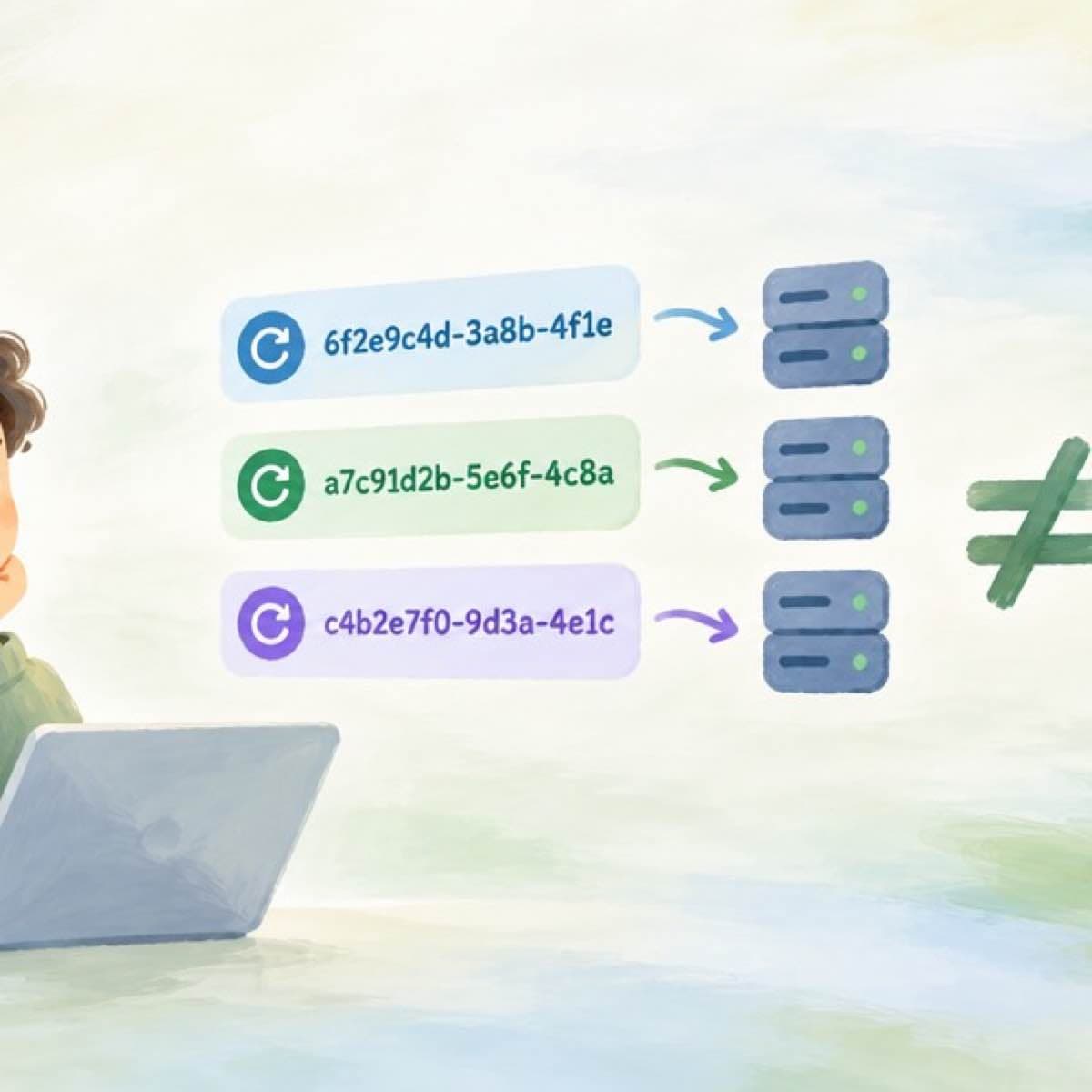
A fresh UUID per retry is not an idempotency key (Node, Sume)
Create the Idempotency-Key once outside the retry loop, retry only 429, 502, 503 and 504, and stop on 4xx. A Node submit helper for Sume /v1/videos.

Replay a sume/auto video submit with one key, assert one job
Submit model sume/auto twice with the same Idempotency-Key and assert the same job id and the same route. Why a replay is safe and why Sume hides the family.

Idempotency-Key from a body hash plus a take number (Node, Sume)
Build an Idempotency-Key for Sume /v1/videos from a SHA-256 of the body plus a take counter, so a retry replays and a re-roll pays. Node code.

Retry a timed-out 30-second Wan job: Idempotency-Key vs paying twice
A 30-second Wan 3.0 1080p job reserves $7.50. Resubmit it without an Idempotency-Key after a timeout and you can hold $15.00; the same key does not.

Total usage.cost for Sume video job ids with curl, jq and awk
One shell pipeline: read job ids from a file, GET /v1/videos/{id} for each, keep completed jobs, and sum usage.cost with awk. No Python or Node needed.

Unattended agent: stop or retry on Sume 402, 409, 429, 503?
An unattended Sume agent should stop on 402, fix on 400, retry 429 and 503 with the same idempotency key, and never reuse a key after a 409.

Check Sume image prices yourself: fal list x 1.25 for five rows
Verify Sume's per-image price in one minute: fal's list for Ideogram 4.5 ($0.03, $0.06, $0.22), Recraft V4 ($0.04) and Seedream 5 Lite ($0.035) times 1.25.

Check your image cost table against Sume /v1/images/models cost_usd
Read pricing lines from GET /v1/images/models/{id}/endpoints and compare cost_usd with your own table before a batch. Sume lines already include its margin.

Haiku 5.5 cache write vs read: break-even on a Sume tool catalog
Haiku 5.5 charges $0.125 per million to write cache and $0.01 to read it. For a 12,000-token Sume tool list the cache pays back on the first reuse.

Mistral Large 4 on a 12-turn storyboard: tokens are 4% of the bill
Mistral Large 4 lists $1.36 input and $4.18 output per million tokens. A 12-turn run that makes six Wan 3.0 clips spends 4.3% of its total on tokens.

Nightly read-only MCP audit: Haiku 5.5 vs Mistral Large 4 cost
A 30-turn nightly audit over Sume's read-only MCP tools costs $0.02175 on Haiku 5.5 and $0.27615 on Mistral Large 4, about 12.7x more, on stated assumptions.

script_run limits: timeout 5-55 s, max_calls and max_paid_calls
Sume's script_run runs a short script of MCP tool calls with a 5 to 55 second timeout and caps on calls and paid calls. What it returns and cannot call.

Deno.serve webhook receiver for Sume jobs: Web Crypto HMAC, rotation
Verify Sume job webhooks in Deno with Web Crypto: refuse an empty secret, accept any rotation entry, 300 s tolerance, return 204. Retry window is 370 s.

Face swap webhook receiver in Python that refuses an empty secret
Verify a Sume face swap job.completed webhook in Python: HMAC SHA-256 over timestamp.body, sume-v1 entries, a 5-minute window, and an empty secret refused.
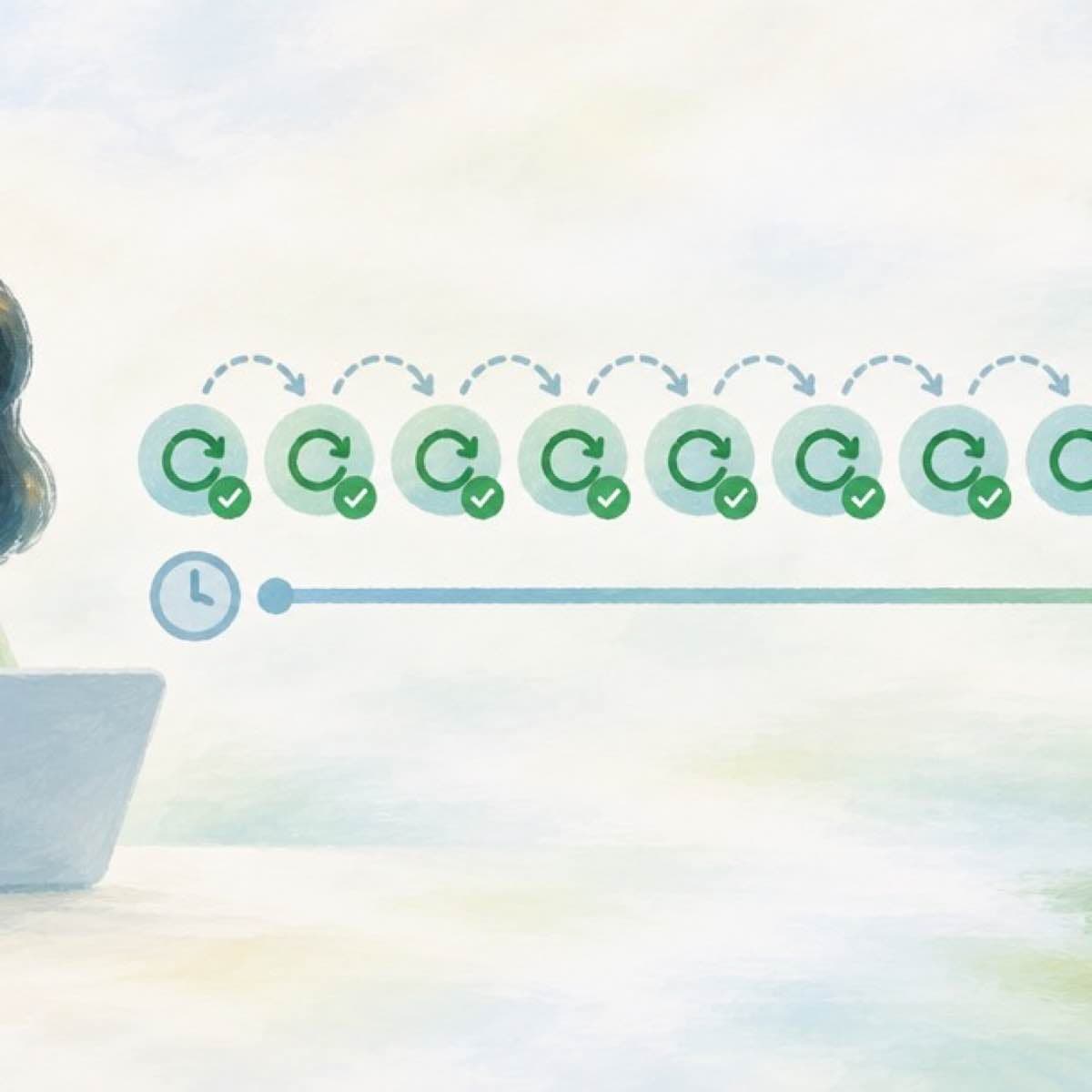
Agent Completion webhook retries: 10 attempts over about 3 hours
Sume tries an agent.run.terminal webhook up to 10 times. By the documented formula the nine waits add up to about 3 h 3 min, before jitter and Retry-After.

OpenRouter video client on Sume: cancelled is terminal, callback_url
Moving an OpenRouter video client to Sume: add cancelled to your terminal statuses, send callback_url on each request, and keep unknown statuses non-terminal.

Scheduled run spend cap: a request can lower it, never raise it
A Sume schedule's per-run cap is min(request, schedule cap). A $3 request on a $1 schedule runs at $1; null removes the ceiling; 0 is a 400.

Scheduled run input: 64 properties and 2 MiB, how to pack a brief
A Sume scheduled run takes an input object of at most 64 properties and 2,097,152 bytes. Here is how to pack a brief for an agent without hitting either limit.

LinkedIn 1200x675 video ad: Sume needs even sizes, so use 1280x720
LinkedIn lists 1200x675 as a 16:9 size, but 675 is odd. Sume timeline sizes must be even, so render 1280x720 or 1920x1080, both inside LinkedIn's range.

One 16:9 size for TikTok and LinkedIn ads: 960x540 to 1920x1080
TikTok's 16:9 minimum is 960x540 and LinkedIn's maximum is 1920x1080. 1280x720 and 1920x1080 clear both; 854x480 fails TikTok, 2048x1152 fails LinkedIn.

One 9:16 size for TikTok and LinkedIn ads: 540x960 to 1080x1920
TikTok needs 9:16 at 540x960 or more; LinkedIn tops out at 1080x1920. Any even size between them clears both, and 720x1280 and 1080x1920 are the easy picks.

AI music adds vocals under narration: the Sume prompt fix
Sume Music has no negative prompt: a non-empty one returns 400. End the prompt with Instrumental, no vocals; add no spoken word. Each retry is $0.125.

AI voiceover too loud: three Sume gain knobs and what each one costs
TTS generation_config.volume (0.5-2), Timeline audio.gain_db (-60 to 12) and soundtrack.duck_db (0-20). Which to change, and which means paying for new audio.

Agent Completions rejects assistant turns: how to carry chat history
Sume Agent Completions return 400 on any assistant message in messages[] and start a fresh thread each time. Here is what that means for multi-turn history.

LinkedIn video minimums 360x360, 360x450, 360x640: Sume floor is 256
LinkedIn's smallest accepted video sizes are 360 px on the short side. Sume timeline output can go down to 256 px, so set the size yourself and stay above 360.

Bulk queue item with run_id null and format_run_failed_to_start
In a Sume Format bulk queue, an item that never started has run_id null and an error like format_run_failed_to_start. The queue goes on; resubmit that row.

Which Sume video models take 9:16 vertical, and what 10 seconds costs
For 9:16 on Sume: Gemini Omni Flash 1.1, Seedance 2.0 and 2.5. A 10-second 720p vertical clip is $1.25, $3.78 or $5.78. What each model accepts.

Runway wait_for_task_output vs a Sume poll loop in Python
Runway's SDK blocks in wait_for_task_output and raises TaskFailedError. On Sume's /v1/videos route you poll a URL yourself; a 10-second loop does it.

Which AI video models on Sume make their own audio track
Gemini Omni Flash 1.1 always generates audio and rejects generate_audio false; MiniMax H3 Max has native stereo audio; Seedance 2.0 reports generate_audio true.

Which MCP grant lets an agent create an avatar? Write, no paid scope
On Sume's hosted MCP, avatars_create and the avatar video tools are paid tools that need the Write toggle at consent. There is no mcp:paid scope.

Transcribe a 15-second voice note in one request: STT sync mode
Sume STT can answer in the same HTTP call: mode sync with wait_timeout_seconds up to 30 returns 200, otherwise 202 and a poll. A $0.01 minimum, with curl.

YouTube Shorts bitrate and file size limit: the help page lists none
The YouTube Shorts help page lists length, aspect ratio and copyright rules, but no bitrate or file size. Sume can set the size, fps and a 3-minute cut.

LinkedIn 75 KB minimum video size: what a 3-second ad means in kbps
LinkedIn video ads must be at least 75 KB and at least 3 seconds. A 3-second clip clears 75 KB at about 200 kbps, so a trim from Sume will pass.

Resize a clip while trimming: output needs precision exact
Sume video trim takes output {width, height, fps} only with precision exact, the default. With keyframe you get video_trim_output_requires_exact. $0.02 a job.

3-second product hook: Seedance 2.5 bills 4 s, Wan 3.0 bills 3 s
Seedance 2.5 on Sume starts at 4 seconds, so a 3-second hook at 720p bills 4 x $0.5778 = $2.31. Wan 3.0 accepts 2 seconds: 3 x $0.125 = $0.375.

Runway's three Seedance 2 tiers vs Sume's one: 10 seconds at 720p
Runway lists seedance2_mini at 16, seedance2_fast at 29 and seedance2 at 36 credits per second. Sume lists one seedance-2 at $0.378 per second at 720p.

Omni Flash 1.1 is billed in tokens: 5,792 per 720p second, in dollars
Google bills Gemini Omni Flash 1.1 at 5,792 output tokens per 720p second and $17.50 per million. The math to dollars, and the Sume per-second rate.

Luma Ray 3.2 alternative: one /v1/generations route vs Sume's two
Luma's API sends images and video through POST /v1/generations. Sume splits them into /v1/videos and /v1/images and does not list ray-3.2 in its docs.

Pinterest video ad bitrate: no figure listed, 2 GB/15 min is 17.8 Mbps
Pinterest's ad specs list no bitrate. The only ceiling is 2 GB at up to 15 minutes, about 17.8 Mbps average. Sume has no bitrate field, so check the file size.

Kling 4.0 API price: not public yet; what you can call today on Sume
No public Kling 4.0 API price was found on 2026-10-09. Sume lists a kling-3 video id and Kling 3.0 Motion Control at $0.1575 per second, 1 to 30 seconds.